

Hormonal imbalances present unique health challenges and come with a long list of life-draining symptoms including hot flashes & night sweats, sleep disturbances, mood changes and anxiety, as well as weight gain, slowing metabolism and irregular periods.
Many of these symptoms occur as a direct consequence of naturally declining hormone levels (such as estrogen and progesterone) during perimenopause and menopause – but today’s busy, always-on lifestyle paired with an epidemic of chronic health issues frequently contributes to “hormonal havoc” that’s wrecking your life.
When your hormones are “out of whack”, everything is out of whack… making you think you’re going crazy.
Unfortunately, most medical schools aren’t teaching endocrine (hormone) disorders in sufficient detail, leaving PCPs and even OBGYNs ill-prepared to address your very valid concerns.
So if you feel discouraged, please don’t give up!
While taming these waves of hormone chaos is no small feat, it definitely isn't impossible.
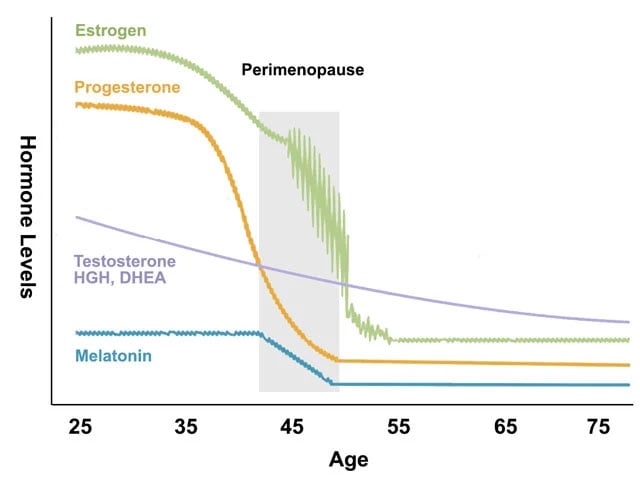
Menopause often begins in a woman’s late 40s to early 50s, when her ovaries cease producing eggs and stop the subsequent release of hormones that initiate the monthly menstrual cycle.
Perimenopause is the stage just before menopause when a woman’s menstrual cycles start to become irregular, triggering symptoms similar to menopause.
Hormone levels change dramatically throughout perimenopause into menopause, inducing uncomfortable symptoms commonly associated with this stage in life.
Since hormones control every aspect of the body's function – from temperature regulation to metabolism to the sleep cycle, it’s no wonder that most women experience a wide range of frustrating issues during this transition.
Yet while menopause is unavoidable, you don't have to let hormone imbalances call the shots.
Many women don’t realize that there are natural options available to help them restore optimal hormone levels, including lifestyle changes and bioidentical hormone replacement therapy (BHRT) for women.
This type of therapy can naturally restore optimal hormone levels, leading to improved physical and mental health.
Let's dive into more detail how BHRT for women works, who should get it, potential side effects, and why partnering with Pristine Hormones & Weight is such a smart move.
A woman’s ovaries produce hormones including estrogen. If her ovaries are removed, post-surgical symptoms mimic menopause, even when the patient is younger than the typical menopausal age.
Unusually low testosterone levels in women may manifest as low sex drive, fatigue, weakness and muscle mass loss, as well as bone loss, depression & mood changes, or vaginal dryness.
Counterintuitively, women can experience high testosterone, which may lead to a condition called Polycystic Ovary Syndrome (PCOS), which is quite common in younger women. PCOS can be difficult to diagnose.
High testosterone levels can present with symptoms such as aggression, moodiness, and excess facial hair.
Also called underactive thyroid disease, hypothyroidism is a common disorder. With hypothyroidism, your thyroid gland does not make enough thyroid hormone.
When you do not have enough thyroid hormone, your body processes slow down, resulting in less energy and a sluggish metabolism.
Inadequate sleep affects hormones that control appetite, metabolism, and reproductive health. Chronic stress raises cortisol levels, which can disrupt the balance of other hormones like estrogen and progesterone.
Exposure to endocrine disruptors (like BPA or pesticides) can mimic or interfere with natural hormones.
Diets high in processed foods and sugar can interfere with insulin and other hormone regulation.
Too little activity or overtraining can both negatively impact hormone production.
Certain medications, including hormonal birth control or steroids, can alter natural hormone production

Before diving into bioidentical hormone replacement therapy for women, it's important to evaluate your current hormone levels to determine the best personalized treatment approach – ideally through lifestyle changes that support natural hormone balance.
The most common lab tests for estrogen and progesterone are blood tests, but depending on your unique situation, urine and saliva tests are frequently used as well.
In addition, I might also test for other hormones such as DHEA, testosterone, cortisol or thyroid hormones to get a more complete picture of your current hormone health. It's important to note that these tests are usually done on specific days of the menstrual cycle and should be done under the guidance of a healthcare provider.
Given my team's expertise in treating hormone imbalances, the best first step is to schedule a free discovery call to discuss your situation and what hormone testing might be required. I will help you understand what’s going on and come up with a comprehensive plan that might involve bioidentical hormone replacement therapy.

BHRT is a treatment approach that uses bioidentical forms of progesterone and estrogen (identical in molecular structure to the hormones produced by your ovaries) to optimize hormone levels so you can reclaim your vitality, energy levels and sex drive.
Because your body can't tell whether the hormones came from your ovaries or the pharmacy, BHRT is arguably safer than synthetic progesterone and estrogen medications merely mimicking the function of these hormones.
In addition, there are many studies over the last 30 years that have shown BHRT as a safe and effective strategy for treating hormone imbalances – provided that appropriate hormone testing is used to individualize your dose to your specific needs.
Women who have used BHRT have experienced the following benefits:

When considering hormone replacement, it's important to work with a licensed health practitioner with expertise in hormone issues.
When working with clients, I provide the right guidance for their unique situation. I also examine lifestyle factors that could be unnecessarily draining your natural hormones and provide guidance on natural ways to boost your resilience and longevity.
Bioidentical hormone pellet therapy offers many benefits including consistent delivery and potentially fewer side effects compared to other dosing forms. If you think that this type of treatment might be right for you , then consider signing up for a free consultation so I can answer any questions you may have.
Your safety comes first. Hormone therapy is considered when symptoms are bothersome and benefits outweigh risks for you. If you still have a uterus, estrogen must usually be paired with a progestogen to protect the uterine lining. If you’ve had a hysterectomy, estrogen alone may be used. I review your history (breast/uterine cancer, blood clots, stroke, heart disease, liver disease, migraines with aura, unexplained bleeding), medicines, and goals before making a plan. I also check blood pressure and discuss family history.
Pellet therapy uses small implants placed under the skin that release hormones over months. Because pellets are typically compounded (not FDA-approved products), dose consistency and safety data are more limited than with approved patches, gels, sprays, or pills. Pellets can’t be removed easily if the dose feels too strong. Local site issues (tenderness, bruising, infection, or rare extrusion) can occur. For these reasons, major medical groups recommend using FDA-approved formulations when possible and reserving compounded pellets for special situations. If a pellet route is chosen, we’ll set a careful follow-up plan and keep the dose as low as needed for symptom control.
Most healthy women who start systemic hormone therapy before age 60 or within 10 years of menopause have a favorable benefit–risk profile for hot flashes/night sweats and bone protection. However, age alone is not the defining factor. I want to get women comfortable to reach out who are outside this age range. We do not believe missed window. Risks depend on type, dose, route, and timing; we’ll personalize and reassess regularly. Seek urgent care for chest pain, trouble breathing, sudden severe headache, one-sided weakness, vision changes, or heavy unexplained vaginal bleeding.
No. “Bioidentical” describes molecular structure, not risk. Safety depends on dose, route, timing, and your personal history. I individualize and monitor.
Yes – adding a progestogen protects the lining. Even if you’ve had a hysterectomy, we recommend progesterone to everyone due to its multiple benefits throughout the body.
Transdermal estrogen may have a lower risk of blood clots for some women and avoids first-pass liver effects. I choose the route that fits your risks and preferences.
Pellets are usually compounded and can’t be quickly adjusted or removed. Some women prefer them, but major groups recommend FDA-approved options first. If pellets are used, I"ll monitor closely.
Many notice fewer hot flashes and better sleep within a few weeks. Fine-tuning dose and route can take a bit longer.
That’s a specialized discussion with your oncology team. Non-hormonal options are often preferred. We’ll coordinate care.
By improving sleep and vasomotor symptoms, BHRT often helps mood and daily function. Lasting weight changes still rely on nutrition, activity, stress, and sleep.
Telehealth is available after your first in-person visit at Pristine Hormones & Weight.
I'll review your goals and history and outline smart first steps. I can go over specific tests, treatments, and services as part of that call.
You may also want to read about Perimenopause, PMS, PCOS, Insulin Resistance, Medical Weight Loss, and Functional Medicine, since these areas often interact with hormone balance, sleep, energy, and long-term health.
Pristine Hormones & Weight is located in Reno, Nevada, and serves patients throughout the Greater Reno Area.